Why API-First Survey Tools Are Eating Enterprise Feedback Management
Remember when collecting customer feedback meant manually creating surveys, manually sending them out, and manually compiling the results? Neither do we. Yet somehow, enterprise survey platforms still act like it's 2010.
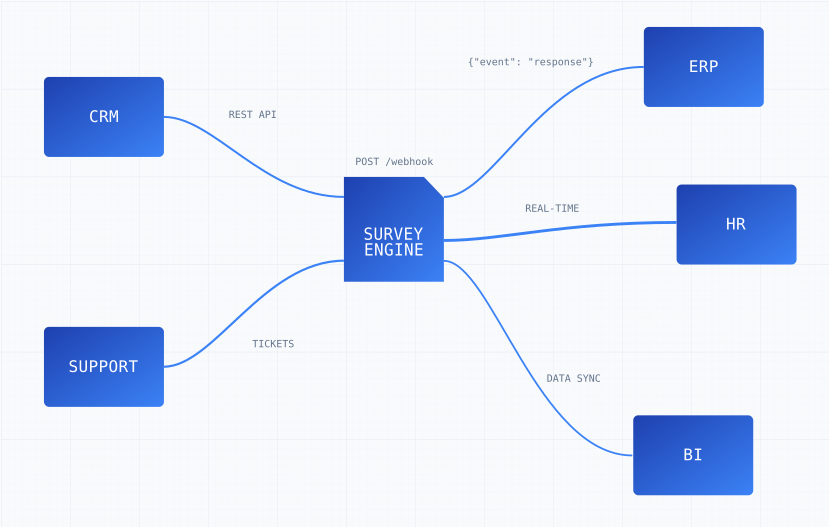
The Problem With Traditional Survey Platforms
Take a moment to think about how your business actually works. Your CRM automatically updates your support desk. Your HR system seamlessly connects to payroll. Your inventory system talks directly to suppliers. Everything is connected, automated, and efficient. Then there's your survey platform, sitting in its silo, demanding manual attention like a neglected pet.
The problem isn't just that traditional platforms are manual - it's that they're built backwards. Instead of fitting into your existing business processes, they demand you build your processes around them. Want to automatically trigger a survey when a support ticket closes? Good luck. Want that feedback automatically attached to the original ticket? Even worse.
API-First: The Way Modern Business Actually Works
Modern business processes are automated chains of cause and effect. A customer complaint triggers a support ticket. The ticket triggers a response. The response triggers a follow-up. Each step flows naturally into the next. Your survey platform should be part of this flow, not an obstacle to it.
The Reality of "Integration Ready"
When traditional enterprise survey platforms claim to be "integration ready," what they really mean is "we'll let you export your data... eventually." They'll make you navigate their clunky interface, pay extra for basic API access, and deal with rate limits that make real automation impossible.
This isn't integration - it's obstacle course design. Real integration means your systems work together seamlessly, automatically, without manual intervention. It means surveys trigger when they should, data flows where it needs to, and nothing gets lost in translation.
Breaking Free from Platform Lock-in
Every enterprise survey platform promises to be a "complete solution." But complete solutions come with complete bills and complete headaches. You end up paying for features you'll never use, interfaces you don't need, and complexity that slows you down. Worse, you're stuck training your team to use tools that nobody actually wants to use.
Think about what you really need. You need to collect feedback at specific moments in your business processes. You need that feedback to flow automatically to the right people and systems. You need the flexibility to adapt as your processes evolve. That's it.
The API-First Advantage
Consider your current workflow. When should feedback really be collected? When a case closes? When a project completes? When an employee hits their anniversary? Now imagine if all of that just... happened. No manual intervention required. No platform-specific interfaces to learn. No data stuck in silos.
This is what API-first design enables. Instead of forcing you to adapt to yet another platform, it gives you the building blocks to collect feedback exactly when and how you need it. The survey becomes part of your process, not an interruption to it.
The Future is Event-Driven
Tomorrow's businesses won't have time for manual survey management. They need tools that respond to business events in real-time, route data where it belongs automatically, and scale without breaking the bank. Most importantly, they need tools that fit their processes, not the other way around.
The future of enterprise feedback isn't about who has the most features or the flashiest interface. It's about who can seamlessly integrate into the complex web of systems and processes that modern businesses run on. It's about tools that get out of the way and let businesses work the way they need to.
Making the Switch
Moving to an API-first survey platform isn't just about better technology - it's about better business. It's about collecting feedback when it matters, where it matters, and making sure it gets to the people who can act on it. It's about turning feedback from a manual chore into an automated insight engine.
Want to see what API-first survey management looks like in action? Let's talk.